

Table of Contents
- Introduction to Baby Food Purees
- When to Start Baby Purees
- Essential Tools for Making Baby Purees
- Stage 1 Baby Food Purees (6+ Months)
- Stage 2 Baby Food Purees (8+ Months)
- Stage 3 Baby Food Purees (10+ Months)
- Advanced Combination Purees
- Essential Storage and Safety Guidelines
- Frequently Asked Questions
Introduction to Baby Food Purees: Starting Your Weaning Journey

Introducing your baby to solid foods is an exciting milestone in their development, and homemade baby food purees are an excellent way to start this important transition. Whether you’re beginning baby-led weaning at 6 months or introducing first foods to your little one, purees provide a smooth, easily digestible texture that’s perfect for babies transitioning from breast milk or formula to solid foods.
Making homemade baby purees offers numerous advantages over store-bought baby food. You have complete control over ingredients, ensuring your baby receives fresh, organic options without added preservatives, sugars, or salt. Plus, preparing baby food at home is cost-effective and allows you to introduce a wide variety of flavors and nutrients tailored to your baby’s developmental stage.
When to Start Baby Purees
Most pediatricians recommend introducing solid foods around 6 months of age, when babies typically show signs of readiness such as:
- Sitting up with minimal support
- Showing interest in food
- Lost the tongue-thrust reflex
- Can hold their head steady
Always consult with your pediatrician before starting solids, especially if your baby has any allergies or health concerns.
Essential Tools for Making Baby Purees
- High-quality blender or food processor
- Steamer basket or baby food maker
- Ice cube trays for portioning and freezing
- Airtight storage containers
- Sharp peeler and knife
Stage 1 Baby Food Purees (6+ Months)
1. Sweet Potato Puree

Ingredients:
- 1 medium sweet potato, peeled and diced
- Water for steaming
Instructions:
- Steam the sweet potato for 15-20 minutes until fork-tender
- Transfer to a blender or food processor
- Puree until silky smooth, adding steaming water 1 tablespoon at a time
- Cool completely before serving
2. Avocado Banana Puree
 Nutritional Benefits: Packed with healthy monounsaturated fats, essential for brain development. High in potassium, folate, and vitamin B6.
Ingredients:
- 1 ripe banana
- 1/2 ripe avocado
Instructions:
- Mash the banana thoroughly with a fork
- Add the avocado and continue mashing
- Blend until completely smooth, or leave slightly chunky for older babies
- Serve immediately (this puree doesn’t store well due to oxidation)
3. Carrot and Apple Puree
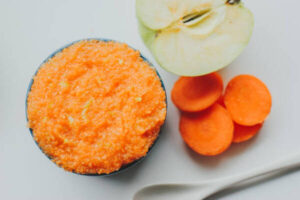 Nutritional Benefits: Beta-carotene from carrots promotes eye health, while apples provide natural sweetness and fiber.
Ingredients:
- 2 medium carrots, peeled and sliced
- 1 apple (Fuji or Gala), peeled and diced
Instructions:
- Steam carrots and apple together for 15-20 minutes until very soft
- Puree in a blender, adding steaming liquid as needed
- Ensure texture is completely smooth for younger babies
4. Butternut Squash and Pea Puree
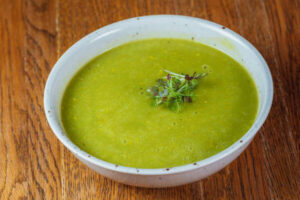 Nutritional Benefits: Butternut squash provides vitamins A and C, while peas add plant-based protein and iron.
Ingredients:
- 1 cup butternut squash, peeled and diced
- 1/2 cup peas (fresh or frozen)
Instructions:
- Steam butternut squash for 10 minutes
- Add peas and steam for an additional 5 minutes
- Blend until velvety smooth
- Cool before serving
5. Pear and Spinach Puree
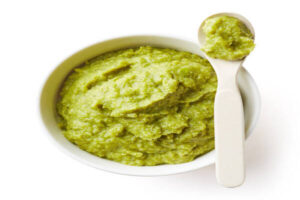 Nutritional Benefits: Spinach is an iron powerhouse, while pears aid digestion and add natural sweetness.
Ingredients:
- 1 ripe pear, peeled and diced
- Large handful of fresh spinach leaves (about 1 cup)
Instructions:
- Steam pear and spinach together for 8-10 minutes
- Blend immediately while hot for vibrant green color
- Strain if texture is too fibrous for younger babies
Stage 2 Baby Food Purees (8+ Months)
6. Quinoa and Apple Puree
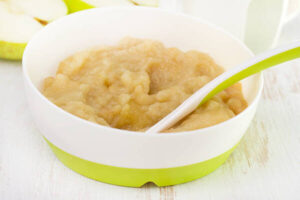 Nutritional Benefits: Quinoa is a complete protein containing all nine essential amino acids. Perfect for vegetarian babies.
Ingredients:
- 1/4 cup quinoa, rinsed thoroughly
- 1 apple, peeled and diced
- Water for cooking
Instructions:
- Cook quinoa according to package directions (usually 15 minutes)
- Steam apple until soft
- Combine cooked quinoa and apple in blender
- Add water or breast milk for desired consistency
7. Chickpea and Carrot Puree
 Nutritional Benefits: Plant-based protein and fiber from chickpeas, plus beta-carotene from carrots.
Ingredients:
- 1/2 cup cooked chickpeas (or canned, rinsed)
- 1 large carrot, peeled and sliced
Instructions:
- Steam carrot until very tender (about 15 minutes)
- Combine chickpeas and steamed carrot in food processor
- Blend thoroughly, adding water or low-sodium vegetable broth
- Ensure chickpea skins are completely pureed
8. Broccoli and Cauliflower Puree
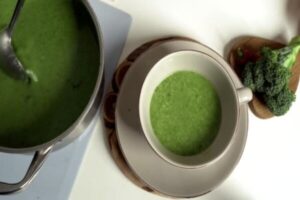 Nutritional Benefits: Cruciferous vegetables are rich in vitamin C, vitamin K, and folate. Supports immune health.
Ingredients:
- 1 cup broccoli florets
- 1 cup cauliflower florets
Instructions:
- Steam vegetables for 12-15 minutes until fork-tender
- Puree until smooth (may need extra water)
- Can mix with a small amount of breast milk or cheese for a creamier texture
9. Mango and Yogurt Puree
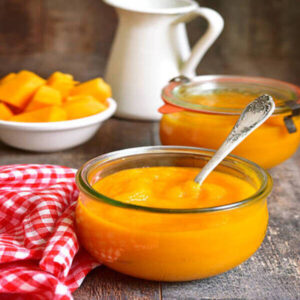 Nutritional Benefits: Tropical fruit is rich in vitamins C and vitamin A, combined with probiotic-rich yogurt for gut health.
Ingredients:
- 1 ripe mango, peeled and diced
- 2 tablespoons plain whole milk Greek yogurt
Instructions:
- Blend fresh mango until smooth
- Stir in yogurt by hand or pulse briefly
- Serve immediately
10. Zucchini and Potato Puree
 Nutritional Benefits: Mild, easily digestible vegetables. Potatoes provide energy-rich carbohydrates.
Ingredients:
- 1 medium zucchini, sliced
- 1 medium potato, peeled and diced
Instructions:
- Steam the zucchini and potato together for 15 minutes
- Blend until creamy and smooth
- Add herbs like parsley for older babies (10+ months)
11. Pumpkin and Banana Puree
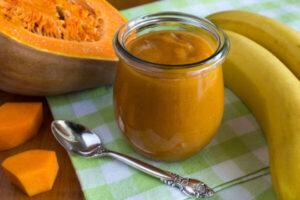 Nutritional Benefits: Fiber-rich combination supporting healthy digestion. High in vitamin A and potassium.
Ingredients:
- 1/2 cup pumpkin puree (fresh steamed or canned unsweetened)
- 1 ripe banana
Instructions:
- If using fresh pumpkin, steam until very soft and puree
- Mash the banana and mix with pumpkin puree
- Blend for ultra-smooth consistency
Stage 3 Baby Food Purees (10+ Months)
12. Blueberry and Oatmeal Puree
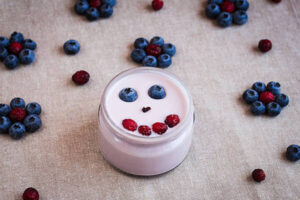 Nutritional Benefits: Antioxidant-rich blueberries combined with heart-healthy oats. Excellent breakfast option.
Ingredients:
- 1/2 cup fresh or frozen blueberries
- 2 tablespoons baby oatmeal (iron-fortified)
- Water or breast milk
Instructions:
- Cook oatmeal according to package instructions
- Blend cooked oatmeal with blueberries
- Add liquid for the desired consistency
13. Apple and Cinnamon Oat Puree
 Nutritional Benefits: Warming spices like cinnamon can be introduced around 8-10 months. Apples provide natural sweetness and fiber.
Ingredients:
- 1 apple, peeled and diced
- 2 tablespoons baby oatmeal
- Small pinch of cinnamon (optional, for 10+ months)
Instructions:
- Steam apple until very soft
- Cook oatmeal separately
- Blend apple, oatmeal, and cinnamon together
- Perfect consistency for self-feeding practice
14. Green Bean and Potato Puree
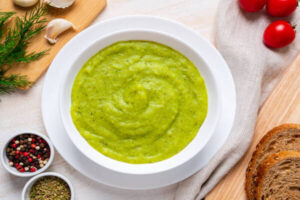 Nutritional Benefits: Green beans provide vitamin K and folate. Potatoes add substance and mild flavor.
Ingredients:
- 1 cup green beans, trimmed
- 1 medium potato, peeled and diced
Instructions:
- Steam green beans and potato for 15-18 minutes
- Puree together until smooth
- Can leave slightly chunky for texture practice
15. Peach and Yogurt Puree
 Nutritional Benefits: Vitamin C, vitamin A, and probiotics for digestive health.
Ingredients:
- 1 ripe peach, peeled and sliced
- 2 tablespoons plain whole milk Greek yogurt
Instructions:
- Steam peach briefly if not very ripe (or use fresh if soft)
- Blend peach until smooth
- Swirl in yogurt
16. Banana and Blueberry Puree
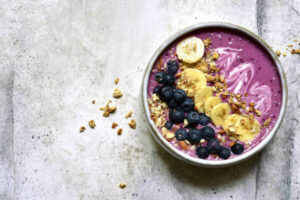 Nutritional Benefits: Antioxidants, potassium, and natural sweetness. No cooking required!
Ingredients:
- 1 ripe banana
- 1/2 cup blueberries (fresh or thawed frozen)
Instructions:
- Mash banana thoroughly
- Add blueberries and blend until smooth
- Can leave slightly chunky for texture
Advanced Combination Purees
17. Cucumber and Melon Puree
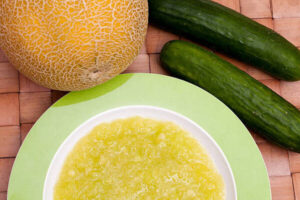 Nutritional Benefits: Hydrating summer puree. Great for teething babies.
Ingredients:
- 1/2 cucumber, peeled and sliced
- 1 cup melon (cantaloupe or honeydew), diced
Instructions:
- Blend cucumber and melon until liquid
- Serve chilled for soothing effect
- Very thin consistency naturally
18. Strawberry and Banana Chia Puree
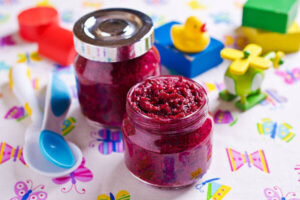 Nutritional Benefits: Omega-3 fatty acids from chia seeds support brain development.
Ingredients:
- 1/2 cup strawberries, hulled
- 1 ripe banana
- 1 tablespoon chia seeds, soaked in 3 tablespoons water
Instructions:
- Soak chia seeds for 15 minutes until gel-like
- Blend strawberries and banana
- Stir in soaked chia seeds
- Let sit 5 minutes before serving
19. Kiwi and Banana Puree
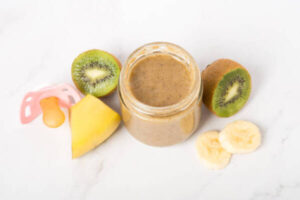 Nutritional Benefits: Exceptionally high in vitamin C. Supports immune system development.
Ingredients:
- 2 ripe kiwis, peeled and sliced
- 1 ripe banana
Instructions:
- Blend kiwi and banana together
- Can strain to remove kiwi seeds if desired
- Bright green color appeals to babies
20. Cauliflower and Cheese Puree
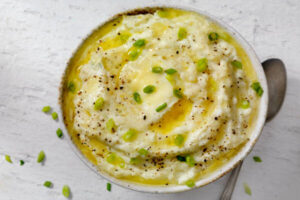 Nutritional Benefits: Calcium from cheese supports bone development. Introduces dairy flavors.
Ingredients:
- 1 cup steamed cauliflower florets
- 2 tablespoons shredded mild cheddar cheese
Instructions:
- Steam cauliflower until very soft
- Blend with cheese while still warm
- Cheese will melt and create creamy texture
21. Peach and Oatmeal Smoothie
 Nutritional Benefits: Balanced breakfast with fiber, vitamins, and sustained energy.
Ingredients:
- 1 ripe peach, peeled and pitted
- 2 tablespoons baby oatmeal (cooked)
- Breast milk or formula for consistency
Instructions:
- Cook oatmeal and let cool slightly
- Blend peach and oatmeal together
- Thin with breast milk or formula
- Can be served in a sippy cup
22. Pears and Green Beans Medley
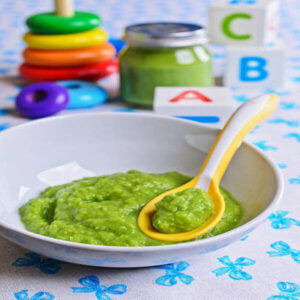 Nutritional Benefits: Unexpected combination that balances sweet and savory flavors.
Ingredients:
- 2 ripe pears, peeled, cored, and diced
- 1 cup green beans, washed and chopped
- Water for steaming
Instructions:
- Steam pears and green beans together for 12-15 minutes
- Blend until smooth
- Add water as needed for consistency
23. Apricot and Quinoa Delight
 Nutritional Benefits: Iron from apricots and complete protein from quinoa. Great for vegetarian babies.
Ingredients:
- 1/2 cup dried apricots, soaked overnight and chopped
- 1/4 cup quinoa, rinsed and cooked
- Water for blending
Instructions:
- Drain soaked apricots
- Blend apricots until smooth puree forms
- Stir in cooked quinoa
- Blend again for desired texture
Essential Storage and Safety Guidelines
Proper Storage for Baby Food Purees
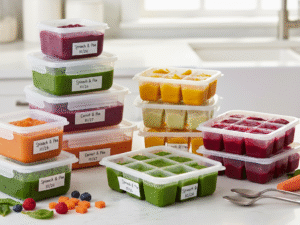 Proper Storage for Baby Food Purees
Refrigeration:
- Store homemade purees in airtight containers
- Label with date and contents
- Use within 3-4 days
- Keep refrigerator at 40°F (4°C) or below
Freezing:
- Use ice cube trays for perfect 1-ounce portions
- Once frozen, transfer cubes to freezer bags
- Label with recipe name and date
- Use within 3 months for best quality
- Never refreeze thawed purees
Food Safety Tips
- Always wash hands before preparing baby food
- Use clean utensils and surfaces to prevent contamination
- Never serve directly from storage container – portion into serving bowl
- Discard uneaten portions that have touched baby’s spoon (saliva introduces bacteria)
- Thaw frozen purees in refrigerator overnight or use warm water bath
- Test temperature before serving – should be lukewarm or room temperature
- Watch for signs of spoilage – unusual odor, color change, or mold
Introducing New Foods Safely
- One new food at a time – wait 3-5 days before introducing another
- Watch for allergic reactions – rash, vomiting, diarrhea, difficulty breathing
- Start with small amounts – 1-2 teaspoons initially
- Gradually increase texture as baby develops chewing skills
- Offer variety to prevent food aversions
- Be patient – babies may reject foods 10-15 times before accepting
Common Food Allergens to Monitor
Top 8 allergens to introduce carefully:
- Milk/dairy
- Eggs
- Peanuts
- Tree nuts
- Soy
- Wheat
- Fish
- Shellfish
Recent guidelines suggest introducing allergens early (around 6 months) under pediatric guidance to reduce allergy risk.
Frequently Asked Questions About Baby Purees
Q: How much puree should I feed my baby?A: Start with 1-2 teaspoons once daily at 6 months. By 8-9 months, increase to 2-3 tablespoons, 2-3 times daily. By 12 months, babies typically eat 3-4 tablespoons per meal.
Q: Can I mix different purees together?A: Yes, once each ingredient has been introduced individually and no allergies are present. Mixing creates new flavor combinations.
Q: Should I add salt, sugar, or spices to baby purees?A: Avoid adding salt or sugar to baby food under 12 months. Mild spices like cinnamon can be introduced around 8-10 months in very small amounts.
Q: My baby refuses purees. What should I do?A: Try different textures, temperatures, and flavor combinations. Some babies prefer baby-led weaning with soft finger foods. Consult your pediatrician.
Q: Can I use frozen vegetables for purees?A: Absolutely! Frozen vegetables are often more nutritious than fresh since they’re frozen at peak ripeness. Avoid added sauces or seasonings.
Q: How do I know if a puree has gone bad?A: Signs include sour smell, mold, color change, or separation. When in doubt, throw it out.
Q: Should purees be warm or cold?A: Room temperature or lukewarm is ideal. Many babies prefer purees at different temperatures, so experiment.
Q: Can I make purees in large batches?A: Yes! Batch cooking saves time. Freeze in portion sizes and thaw as needed.
Conclusion: Your Baby’s Healthy Start with Homemade Purees
 Introducing homemade baby food purees to your little one is a rewarding and nutritious journey that sets the foundation for healthy eating habits. These 23+ easy baby food recipes offer diverse flavors, essential vitamins and minerals, and balanced nutrition to support your baby’s rapid growth and development during their first year.
Making your own baby food purees gives you complete control over ingredients, ensures freshness, and allows you to introduce organic, whole foods without preservatives or added sugars. Whether you’re preparing simple single-ingredient purees for a 6-month-old just starting solids, or creative combination purees for adventurous 10-month-old eaters, these recipes provide everything you need for successful weaning.
Remember to introduce new foods gradually, watch for allergic reactions, and consult your pediatrician with any concerns. Every baby develops at their own pace, so be