


In our fast-paced world, the act of eating has become a rushed experience. We often consume meals while multitasking, barely noticing the flavors, textures, or even the amount we’re eating. But there’s a different approach to eating that offers a multitude of benefits for our physical, emotional, and mental well-being: mindful eating. In this complete guide, we’ll explore the power of mindful eating, its benefits, how to practice it, and some tips to integrate it into your daily life.
What is Mindful Eating?

Mindful eating is a practice rooted in mindfulness, which is the state of being present and fully engaged in the moment. In the context of eating, mindfulness involves paying attention to the experience of eating without judgment. This includes observing your food, its taste, texture, and the physical sensations you experience while eating.
The Benefits of Mindful Eating

Improved Digestion: By slowing down and focusing on your food, you give your body more time to properly digest your meal. This can reduce issues like bloating and indigestion.
Better Appetite Regulation: Mindful eating helps you tune in to your body’s hunger and fullness cues, allowing you to eat when you’re hungry and stop when you’re satisfied.
Enhanced Enjoyment: When you pay close attention to your food, you may find you enjoy it more. This can lead to greater satisfaction from your meals.
Weight Management: By being mindful of your portion sizes and listening to your body’s signals, you may find it easier to maintain a healthy weight.
Reduced Emotional Eating: Mindful eating can help you differentiate between true hunger and emotional hunger, reducing the tendency to eat in response to stress, boredom, or other emotions.
Increased Awareness of Food Choices: Being mindful of what you eat can help you make healthier food choices and understand how different foods affect your body.
How to Practice Mindful Eating
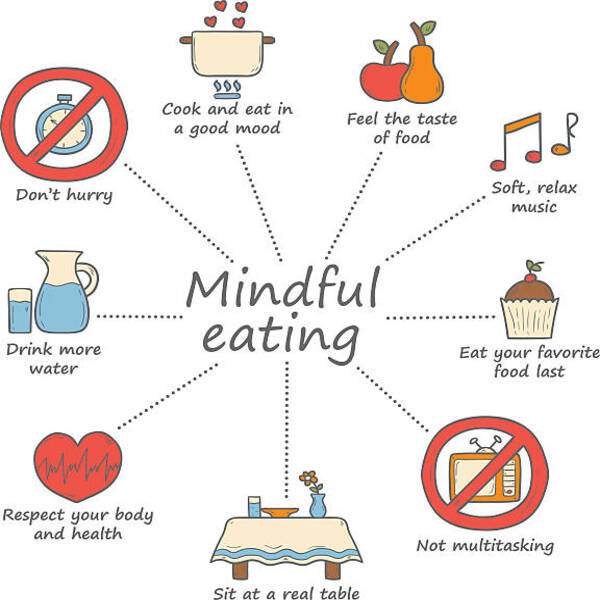
Minimize Distractions: Switch off the TV, stow away your phone, and dedicate your attention entirely to your meal.
Practice Mindful Eating: Deliberately chew each mouthful, allowing yourself to fully experience and appreciate the rich flavors.
Pay Attention to Your Food: Notice the colors, textures, and smells of your meal. Pay attention to your body’s sensations while you eat.
Listen to Your Body: Pay attention to your hunger and fullness signals eat until you feel comfortably satisfied, stopping when you no longer feel hungry.
Practice Gratitude: Take a moment to appreciate your food and where it comes from. Gratitude can enhance your eating experience.
Plan Balanced Meals: Create balanced meals with a variety of nutrients to nourish your body and mind.
Tips to Integrate Mindful Eating into Your Daily Life
- Start Small: Begin by practicing mindful eating for one meal a day and gradually increase.
- Set Intentions: Before each meal, set an intention to eat mindfully.
- Keep a Food Journal: Reflecting on your eating habits can help you become more aware of your relationship with food.
- Practice Mindful Breathing: Take a few deep breaths before your meal to calm your mind and focus on the present moment.
Let’s dive deeper into the power of mindful eating and explore additional aspects that can help you fully embrace this practice.
The Science Behind Mindful Eating
Research has shown that mindful eating can have a positive impact on our physical and mental health:
- Reduced Stress: Mindful eating can activate the body’s relaxation response, helping to reduce stress and anxiety levels.
- Enhanced Nutrient Absorption: By eating slowly and chewing thoroughly, your body can break down food more efficiently, leading to better nutrient absorption.
- Better Blood Sugar Control: By listening to your body’s hunger and fullness cues, you can maintain more stable blood sugar levels, which can be beneficial for people with diabetes.
- Improved Relationship with Food: Mindful eating can help break cycles of restrictive or emotional eating, fostering a healthier and more balanced relationship with food.
Overcoming Common Challenges
Practicing mindful eating can sometimes be challenging, especially when you’re used to eating quickly or while distracted. Here are some strategies for tackling typical challenges:
- Dealing with Time Constraints: Even if you have a busy schedule, you can still practice mindful eating by setting aside specific times for meals and taking a few moments to focus on your food.
- Breaking Habits: It can be difficult to change long-standing habits, such as eating in front of the TV. Start by gradually reducing distractions and incorporating mindfulness techniques into your meals.
- Coping with Emotions: Emotional eating can be a significant hurdle. Try to identify triggers for emotional eating and find alternative coping mechanisms, such as journaling or going for a walk.
Techniques for Different Settings
Mindful eating can be practiced in various settings, whether you’re eating alone, with family, or at social gatherings.
- Eating Alone: When eating alone, you have the opportunity to fully focus on your meal. Use this time to practice mindful eating techniques, such as savoring each bite and paying attention to your body’s signals.
- Eating with Family: Encourage mindful eating habits among your family members by setting the table and turning off distractions. Discuss the meal and take turns sharing your thoughts about the flavors and textures.
- Eating at Social Gatherings: Mindful eating can be more challenging in social settings, but you can still apply its principles. Take smaller portions, eat slowly, and listen to your body.
Mindful Eating Exercises
Here are a few exercises to help you deepen your mindful eating practice:
- The Raisin Exercise: Take a single raisin and examine it closely. Notice its texture, color, and smell. Place it in your mouth and take your time to chew it slowly, savoring the flavors and sensations.
- Mindful Breathing: Before a meal, take a few deep breaths to center yourself. This can help you focus on the eating experience and set the stage for mindful eating.
- Mindful Food Journal: Keep a food journal where you record your eating experiences. Note how you felt before, during, and after your meal. This can help you identify patterns and improve your mindful eating practice.
Advanced Mindful Eating Practices
Body Scan: Before a meal, take a moment to perform a body scan. Close your eyes and check in with how your body feels, focusing on your stomach area. Observe any hunger cues, noting whether you’re physically hungry or if your desire to eat is coming from another source.
Sensory Exploration: As you eat, pay close attention to all of your senses. Notice the look, smell, texture, and taste of your food. This heightened sensory experience can enhance your enjoyment and satisfaction.
Mindful Portion Control: Start with smaller portions and assess your hunger level throughout the meal. This practice can help you avoid overeating and listen more closely to your body’s fullness signals.
Mindful Movement: Incorporate gentle movement, such as yoga or stretching, into your day. This practice can help you stay connected to your body and better understand its signals, which can complement mindful eating.
Mindful Eating Meditation: Try a guided mindful eating meditation, where you focus on the eating process and bring awareness to each bite. This can help you cultivate a deeper sense of mindfulness during meals.
Mindful Eating and Intuitive Eating
Mindful eating is closely related to intuitive eating, a philosophy that encourages you to listen to your body’s hunger and fullness cues and honor them without judgment. Both approaches promote a healthier relationship with food and discourage restrictive dieting.
Some principles of intuitive eating include:
- Rejecting Diet Culture: Letting go of restrictive dieting and embracing a non-diet approach to food.
- Listening to Your Body: Trusting your body’s signals to guide your eating decisions.
- Honoring Hunger and Fullness: Eating when you’re hungry and stopping when you’re comfortably full.
- Respecting Your Body: Accepting your body as it is and treating it with kindness.
Creating a Supportive Environment
To practice mindful eating effectively, it’s important to create an environment that supports this approach:
Kitchen and Dining Space: Keep your kitchen and dining area clean and organized. A clutter-free space can help you focus on your meal and enjoy it more fully.
Mindful Meal Planning: Plan meals in advance to ensure you have nutritious and balanced options available. This can help you make mindful choices about what you eat.
Mindful Grocery Shopping: When shopping for groceries, pay attention to the quality and origin of the foods you choose. Choose fresh, whole foods whenever they’re available.
Support from Others: Share your mindful eating journey with friends and family, and encourage them to join you. Having a support system can make the practice more enjoyable and sustainable.
Set Boundaries: Be mindful of social and cultural pressures that may influence your eating habits. Set boundaries around your meals to protect your mindful eating practice.
Conclusion
Mindful eating is a powerful practice that can transform your relationship with food and enhance your overall well-being. By deepening your understanding of mindful eating and exploring advanced practices, you can cultivate a more meaningful and nourishing approach to your meals. Embrace the journey and be patient with yourself as you develop this lifelong practice. Over time, you’ll experience the profound benefits of mindful eating in your physical, emotional, and mental health.